After Publishing: Check the Live Site and Improve from Buyer Signals
Publishing does not end when an editor says “saved.” A cross-border site serves different languages, devices, and regions, and the public page may update after the admin state. A small review routine keeps the site trustworthy better than simply adding more posts or products.
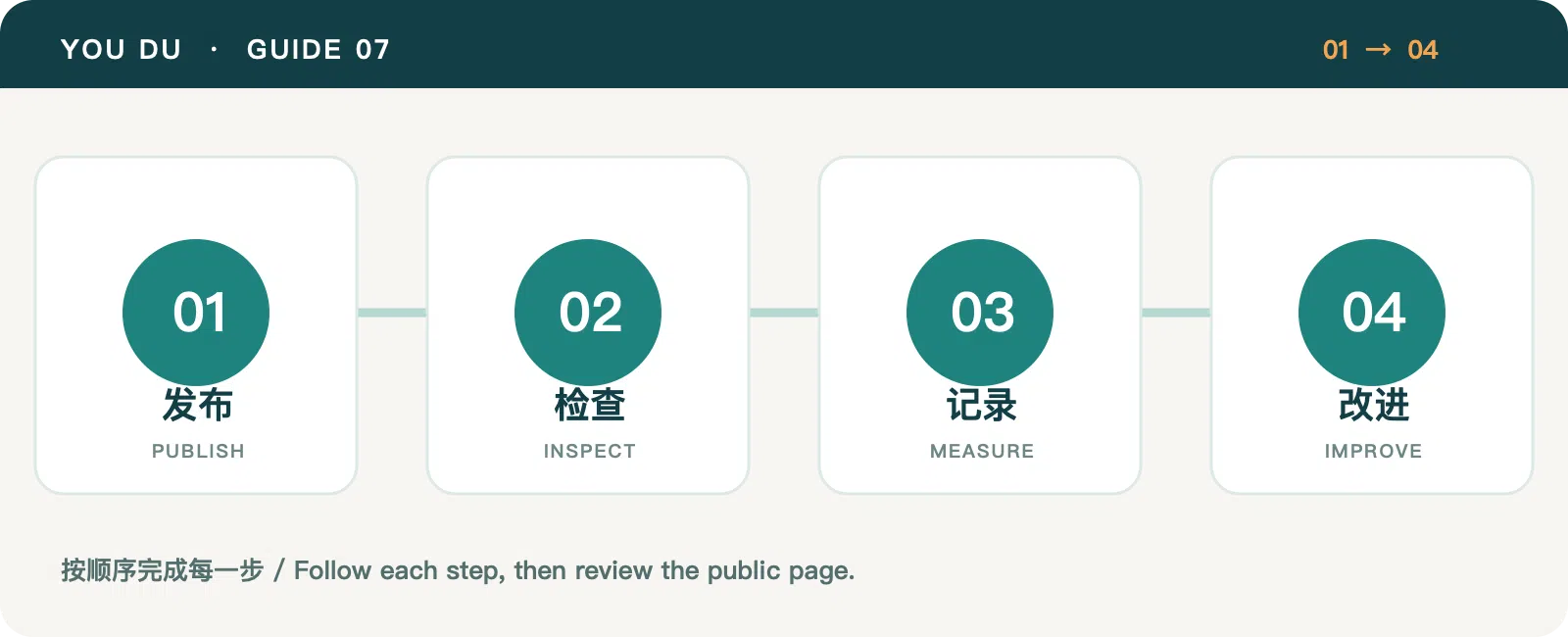
1. Confirm the public version
Saving content queues a rebuild and publication. Wait for the new version, then open the public URL. Do not treat the editor's saved state as proof that visitors can see the change. This matters especially for site names, navigation, categories, and images, because more than one page may be affected.
Keep a short record for each important change: what changed, which pages should change, when you checked, and what you found. If something goes wrong, this helps distinguish a content problem from a publishing delay or asset URL problem.
2. Follow the visitor's full path
On a content site, move from the homepage to an article and Contact. On an inquiry site, move from a category to a product and then send an inquiry. In a store, move from a product to cart, checkout, and the order outcome. Check copy, actions, forms, images, and mobile behavior along the whole route rather than looking only at the homepage.
Walk the route in each language. If an article appears only in the Chinese list, inspect the English translation and publication state. If an image does not load, open its URL on its own.
3. Measure what matches the goal
A content site can review which articles are read and which questions lead to contact. An inquiry site should examine qualified requests and how complete they are. A store should review product interest, checkout, and order exceptions. Traffic alone cannot explain customer satisfaction; pair admin data with real contact messages, inquiries, and orders.
Choose one repeated issue each week, such as buyers failing to find a specification table, make one specific improvement, and observe the result. Changing the headline, image, form, and payment explanation all at once makes it hard to learn what helped.
4. Maintain a realistic publishing rhythm
Separate customer questions into issues best fixed on an existing page and subjects worth a new article. Correct missing facts in a buying or inquiry path first; turn deeper recurring questions into durable guides. Review old links, shipping or price explanations, and contact details regularly so earlier content remains useful.
If you are starting from scratch, begin with the three site modes and brand and language setup, then follow the workflow for your business model.
Category: Site Guides
Tags: Platform Guide · Site Operations · Media & SEO