Build a B2B Inquiry Site: From Product Detail to Sales Follow-Up
A B2B buyer rarely sends a useful inquiry after seeing only a product photo. They need to know whether the equipment fits their process, which specifications to provide, who will respond, and what happens next. A strong inquiry site answers part of that before the form is submitted.
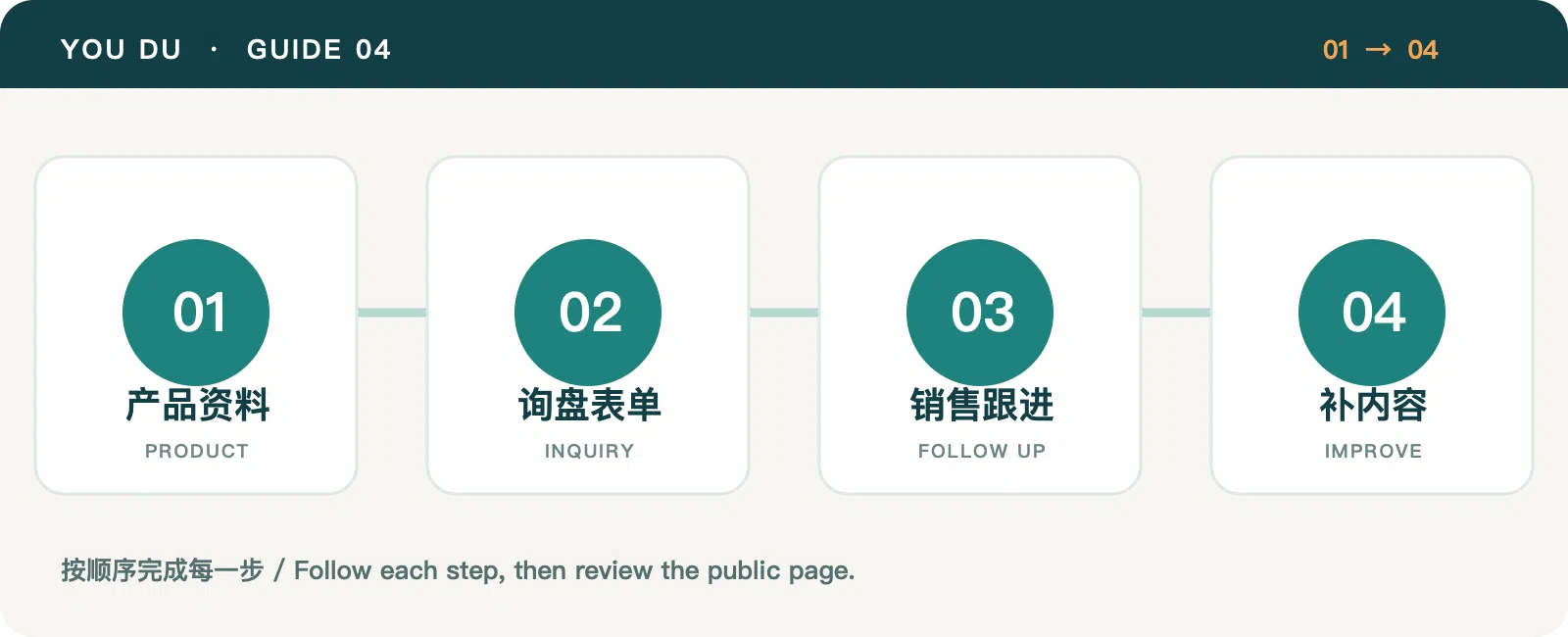
1. Build buyer-friendly product categories
On an inquiry site, create categories around how customers source equipment, then add a few representative products. A category should name a recognizable machine or use rather than an internal code. Each product page should describe its purpose, suitable materials, key specifications, options, scope of delivery, and show accurate images. Make differences between models easy to compare.
Where technical confirmation is necessary, state what the buyer should provide: material thickness, working width, target output, power standard, destination, or other relevant conditions. If a figure is not confirmed, say that it depends on the project instead of inventing a standard specification.
2. Ask for the first-round quotation details
Place the inquiry action where a buyer can find it. Keep the first form focused: contact name, company, email or phone, product, quantity, application, and requirements. Too many questions discourage submission; too few force a long series of follow-up messages.
When a buyer is comparing several machines, the inquiry basket can keep selected products together with one project explanation. A reference price can be shown on an inquiry site, but it should not be treated as a final sales promise; this mode has no direct checkout.
3. Define a response routine
Use Operations → Inquiries to review new requests. Check contact details and requirements, then assign the right owner. A first reply should summarize what was received, list the missing technical details, state when a fuller answer can be expected, and suggest the next step such as a sample or technical call.
Track the inquiry status so team members do not reply twice. General contact messages and product inquiries are separate routes: the latter should retain the selected products and project requirements.
4. Improve pages from repeated questions
Review inquiries each week. If buyers repeatedly ask about lead time, add delivery guidance. If they ask about material compatibility, improve the specification table. If requests lack critical details, adjust the form hints. More precise pages let sales teams spend their time on better-qualified conversations.
Explore the product structure and contact route at Xinrui Machinery, then use the product-page writing guide for the content itself.
Category: Site Guides
Tags: Platform Guide · B2B Inquiries · Content Publishing